
Most coffee is made badly at home — not because the beans are wrong, but because a few small variables are slightly off. Water temperature too high. Grind too coarse for the method. Ratio guessed rather than measured. The gap between a mediocre cup and a genuinely good one is usually not the equipment or even the beans. It is the process.
This guide covers four home brewing methods — pour-over, AeroPress, French press, and Moka pot — with specific variables for each. It is written for Mosaic Brew specifically: a medium-roast northern Thai single-origin arabica with a profile that suits all four methods, though in different ways. The notes below explain which method brings out what in the bean.
If you want to understand what specialty coffee actually means and why it tastes the way it does, the piece on what is specialty coffee covers the underlying reasons before you get to the brewing. And if you want to buy the beans to brew, they are available in the Mosaic Market shop.
Before you start — the variables that matter most
Four things determine the quality of the cup more than anything else:
Grind size. This is the variable most people overlook and the one that makes the most difference. Grind size controls how quickly water extracts flavour from the coffee. Too coarse and the water passes through without pulling enough out — the result is thin, sour, underdeveloped. Too fine and it extracts too much — the result is bitter and astringent. Each brewing method has a specific grind size range. Getting it right matters more than the quality of the grinder, within reason.
Water temperature. Water that is too hot over-extracts and burns the coffee. Water that is too cool under-extracts and produces a flat, sour cup. The ideal range for most specialty coffee is 90 to 96 degrees Celsius — just off the boil. If you do not have a thermometer, bring water to a full boil and let it sit for 30 to 45 seconds before brewing.
Ratio. The ratio of coffee to water is the second most common source of bad home brewing. Too little coffee produces a weak, watery cup. Too much produces an intense, unpleasant one. The ratios below are starting points — adjust to your taste, but adjust deliberately rather than by feel.
Freshness. Coffee peaks in flavour between two and six weeks after roasting and declines after that. A bag without a roast date is a bag whose freshness you cannot verify. Mosaic Brew is roasted in Chiang Mai and dated — brew it within the peak window for the best result.
Pour-over
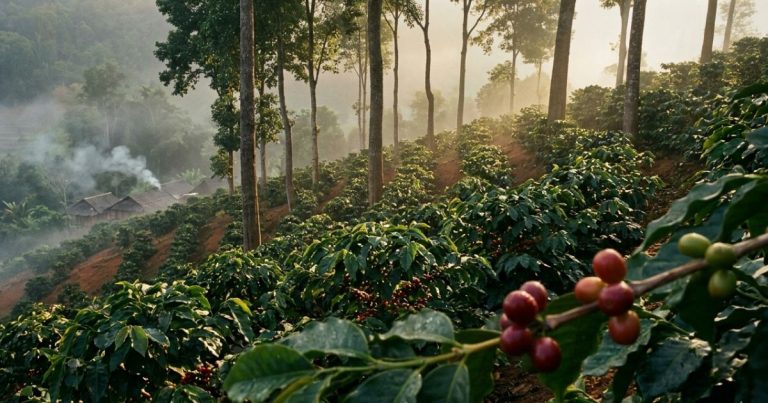
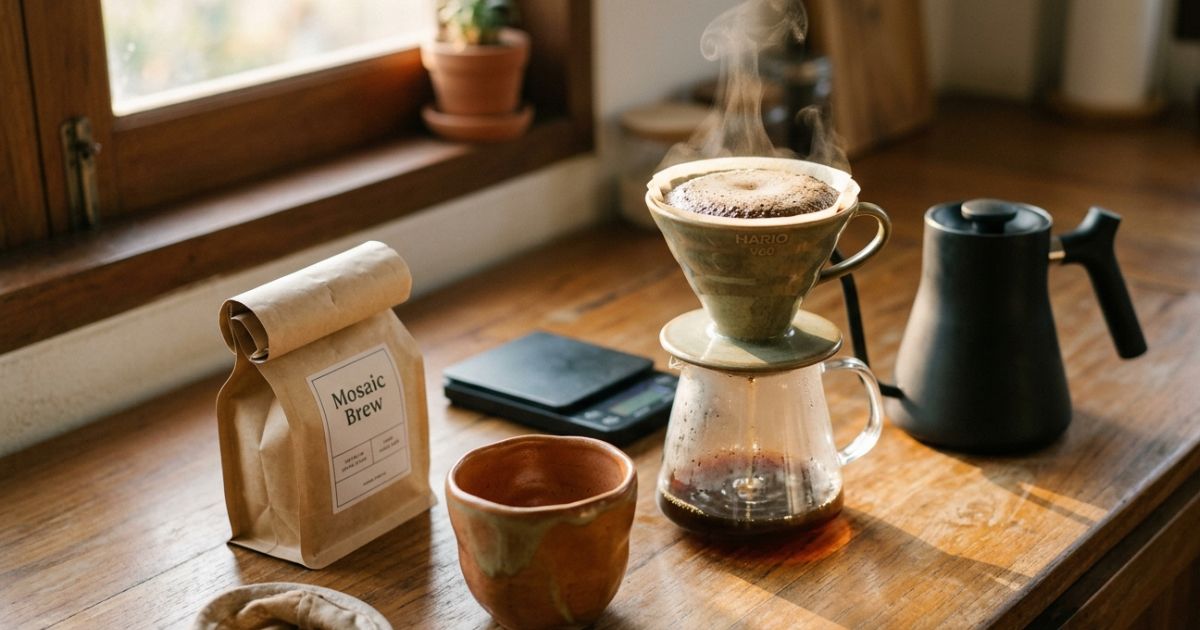
What it does to the flavour: Pour-over produces the cleanest, brightest, most clearly defined expression of a coffee’s origin. The paper filter removes oils and fine particles, leaving a cup with clarity and definition. For northern Thai arabica — grown at altitude, with the complex sugars that slow cherry development produces — pour-over is the method that most precisely expresses what the origin has built into the bean. You will taste the coffee’s acidity, its sweetness, and its individual character most clearly here.
Grind size: Medium-fine. Roughly the texture of table salt. A consistent grind matters here more than in any other method — uneven grind produces uneven extraction and a cup that tastes muddy.
Ratio: 1:15 to 1:16 (coffee to water by weight). 20g of coffee to 300ml of water is a reliable starting point.
Water temperature: 93 to 96°C.
Method:
Rinse the paper filter with hot water before adding coffee — this removes the papery taste the filter can leave in the cup and pre-heats the vessel. Discard the rinse water.
Add your ground coffee. Start your timer. Pour just enough water to wet all the grounds — roughly 40 to 60ml — and wait 30 to 45 seconds. This is called the bloom. CO2 trapped in fresh coffee escapes during this stage, and allowing it to do so before the full pour produces more even extraction.
After the bloom, pour the remaining water steadily in slow circles, keeping the water level consistent rather than flooding or draining. The full pour should take two to three minutes. If it drains faster, your grind is too coarse. If it takes longer than four minutes, it is too fine.
Common mistake: Pouring too fast, which channels the water through specific paths rather than saturating the grounds evenly. Slow, steady circles.
AeroPress
What it does to the flavour: The AeroPress produces a concentrated, full-bodied cup with low acidity and high clarity. It is forgiving — variables can be adjusted widely and the result is rarely undrinkable — which makes it a good starting point for people new to manual brewing. For Mosaic Brew’s medium roast, the AeroPress brings out the body and the chocolate and nut notes more than other methods, with the bright acidity of the origin softened rather than highlighted.
Grind size: Medium-fine, slightly coarser than pour-over. Think fine sea salt.
Ratio: 1:12 to 1:15. 17g of coffee to 200ml of water is a good starting point.
Water temperature: 90 to 93°C. Slightly cooler than pour-over — the AeroPress extracts efficiently at lower temperatures.
Method (standard):
Place a paper filter in the cap and rinse it with hot water. Assemble the AeroPress and pre-heat it. Add your ground coffee. Start your timer.
Pour water to the top of the chamber, stir gently for ten seconds, and place the cap on. At the one-minute mark, flip the AeroPress over onto your cup and press slowly and steadily for 20 to 30 seconds. Stop pressing when you hear a hiss — that is air, and continuing past it extracts bitterness.
The resulting concentrate can be drunk as is (it is full and intense) or diluted with 100 to 150ml of hot water to produce a longer cup.
The inverted method: Many AeroPress enthusiasts brew inverted — assembling the AeroPress upside down with the plunger in, filling and steeping before flipping to press. This allows a longer steep and more control over extraction time. Worth trying once you are comfortable with the standard method.
Common mistake: Pressing too fast. Slow, steady pressure over 20 to 30 seconds extracts more evenly than a rapid push.
French press
What it does to the flavour: French press produces the heaviest, richest, most oil-forward cup of the four methods. The metal mesh filter allows oils and fine coffee particles to pass through into the cup, which produces body and texture that paper-filtered methods strip out. For northern Thai arabica, the French press emphasises roundness and weight over clarity and brightness. It is a different experience of the same beans — less about the origin’s specificity, more about its substance.
Grind size: Coarse. The consistency of coarse sea salt or rough breadcrumbs. This is the most important variable for French press. A grind that is too fine will produce a sludgy, bitter, over-extracted cup and clog the mesh filter. When in doubt, grind coarser than you think is necessary.
Ratio: 1:15 to 1:17. 30g of coffee to 450ml of water for a standard three-cup French press.
Water temperature: 93 to 95°C.
Method:
Add your coarsely ground coffee to the French press. Pour water to just below the top, ensuring all grounds are saturated. Stir gently once to ensure even saturation. Place the lid on with the plunger pulled up. Wait four minutes.
After four minutes, press the plunger slowly and steadily. Pour immediately — leaving coffee in contact with the grounds after pressing continues extraction and produces a bitter result.
Common mistake: Leaving the coffee in the French press after pressing. Pour all of it into cups or a separate vessel as soon as you have pressed. The four-minute brew time is the extraction; everything after that is over-extraction.
A secondary common mistake: grinding too fine. If your French press cup tastes bitter and gritty, coarsen the grind before adjusting anything else.
Moka pot
What it does to the flavour: The Moka pot produces a concentrated, intense, espresso-adjacent cup with significant body and bitterness compared to the other methods. It is not espresso — the pressure is lower and the extraction is different — but it is the closest home approximation. For Mosaic Brew, the Moka pot produces a cup that is bold and dark-leaning, with the origin’s lighter notes largely receding in favour of roast character. It is excellent for milk-based drinks — a flat white or a simple café au lait made with Moka pot concentrate is genuinely excellent.
Grind size: Medium-fine. Slightly coarser than espresso, slightly finer than pour-over. The texture of fine sea salt.
Ratio: Fill the basket with ground coffee, level it off without pressing or packing down. Fill the bottom chamber with water to just below the pressure valve.
Water temperature: Start with hot water in the bottom chamber rather than cold — this reduces the time on heat and prevents the grounds from cooking before the water passes through them.
Method:
Fill the bottom chamber with water just below the pressure valve. Fill the filter basket with ground coffee, levelled but not tamped. Assemble the pot and place on medium-low heat. Leave the lid open.
As the water heats, pressure pushes it through the coffee and into the upper chamber. Watch the flow — when it changes from a steady dark pour to a sputtering, lighter flow, remove the pot from the heat immediately. The sputtering indicates the water chamber is nearly empty and the remaining extraction is bitter.
Run the base briefly under cold water to stop extraction if you want to be precise. Pour immediately.
Common mistake: Using too high a heat. Low and slow produces better extraction and avoids the scorched, acrid taste that comes from overheating. Medium-low heat throughout.
A second common mistake: tamping the grounds as you would espresso. The Moka pot does not have the pressure to push water through a tamped puck — it will simply stall. Level, but never compress.
Which method for which moment
All four methods work well with Mosaic Brew’s medium roast. The choice is really about what kind of cup you want and what the morning calls for.
Pour-over is the method for slow mornings and full attention. It rewards care and produces the most nuanced, origin-specific cup. Good for: tasting what the bean actually is.
AeroPress is the method for efficiency without compromise. It is fast, forgiving, and produces an excellent cup under four minutes. Good for: weekday mornings when you want quality without ritual.
French press is the method for sharing. It scales easily, produces a rich and generous cup, and asks very little of you while it steeps. Good for: making coffee for more than one person, or for lazy Sundays.
Moka pot is the method for espresso drinkers working with a stovetop. The concentrate it produces is excellent in milk drinks. Good for: flat whites at home, or anyone who finds filter coffee too light.
Frequently asked questions
What grind size should I use for pour-over coffee?
Medium-fine — roughly the texture of table salt. Consistency matters as much as size: an uneven grind produces uneven extraction. Burr grinders produce a more consistent grind than blade grinders and make a noticeable difference to cup quality.
What water temperature is best for brewing coffee at home?
90 to 96°C for most brewing methods. If you do not have a thermometer, bring water to a full boil and let it rest for 30 to 45 seconds — it will have dropped to approximately this range. Water that is too hot over-extracts and produces bitterness. Water that is too cool under-extracts and produces sourness.
How much coffee should I use per cup?
As a general starting point: 1 gram of coffee per 15 to 16ml of water for pour-over and AeroPress, and 1 gram per 15 to 17ml for French press. For a 300ml cup, that is approximately 18 to 20 grams of coffee. Adjust from this baseline to your taste — more coffee produces a stronger, more intense cup; less produces something lighter.
Why does my coffee taste bitter at home?
Bitterness in home-brewed coffee is almost always caused by over-extraction — the water has pulled too much from the grounds. The most common causes are: grind too fine for the brewing method, water temperature too high, or brew time too long. For French press specifically, leaving coffee in contact with grounds after pressing is a frequent culprit. Try coarsening the grind first, then adjusting temperature.
Why does my coffee taste sour or flat?
Sourness and flatness indicate under-extraction — the water has not pulled enough from the grounds. Common causes: grind too coarse, water temperature too low, brew time too short, or coffee that is too old and stale. Check the roast date on your bag first. If the coffee is past its peak window (roughly six weeks from roast), no adjustment to technique will fully compensate.
Where can I buy Mosaic Brew to try at home?
Mosaic Brew is available to drink at Mosaic Café in Chiang Mai (open Monday to Saturday) and to buy as bags from the Mosaic Market shop. It is a medium-roast, single-origin northern Thai arabica — roasted in Chiang Mai and dated from roast.