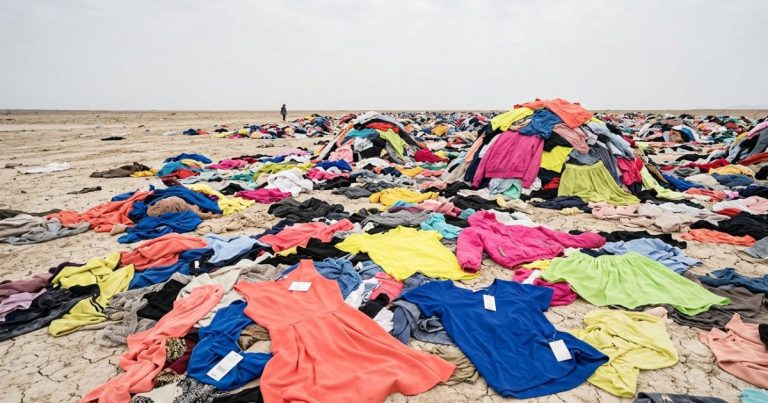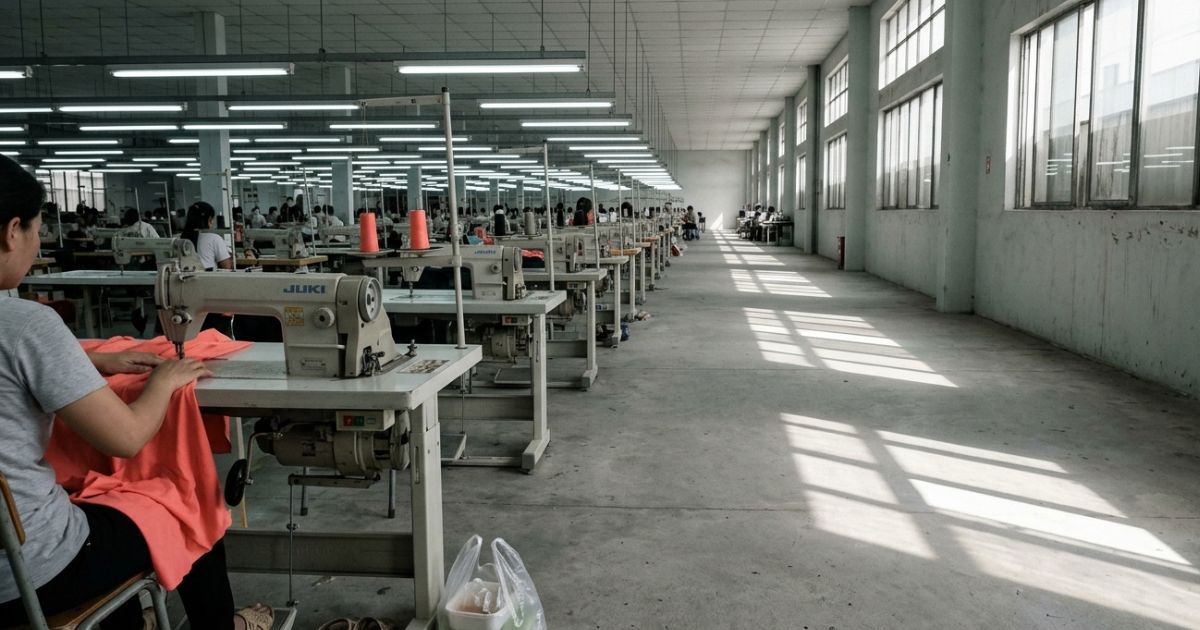

A garment that costs seven dollars in a high street shop took somewhere between four and six hours to make. The fabric was cut, sewn, pressed, folded, tagged, inspected, packed, and shipped — entirely by hand, across a supply chain that typically spans three or four countries before it reaches the shelf.
The person who did the sewing almost certainly did not earn a living wage for it. In most cases, not even close.
This is what the social cost of fast fashion actually means. Not the environmental cost — the carbon, the water, the microplastics — though those are real and significant. The social cost is the human one: who absorbs the expenses that never appear on the price tag, and what that absorption looks like in practice.
The scale of the industry
The global garment industry employs approximately 60 million factory workers, the majority of them concentrated in Bangladesh, China, India, Vietnam, Cambodia, and Indonesia. These are countries where labour costs are low and regulatory enforcement is inconsistent — which is precisely why global brands manufacture there.
The industry brings in more than $150 billion annually and is projected to grow beyond $290 billion by 2032. That growth is built on a simple arithmetic: the lower the production cost, the wider the margin. And the primary lever for production cost is labour.
What makes the fast fashion business model distinct from earlier forms of garment manufacturing is speed. Zara, the Spanish brand credited with originating the term in the early 1990s, described its initial mission as taking just 15 days from design to shelf. Today, some brands launch new styles weekly. Shein has been documented listing thousands of new items every day. That velocity requires not just fast production but relentlessly cheap production — and that pressure flows downward through the supply chain until it lands on the person holding the needle.
The wage gap that does not close
Less than 2 percent of garment workers globally earn a living wage. That figure — verified consistently across research by the Clean Clothes Campaign, Fashion Checker, and independent labour economists — is worth sitting with. Not the minimum wage. A living wage: the bare minimum required to cover food, housing, healthcare, and the basic conditions of a dignified life. Less than two percent.
The situation in Bangladesh, the world’s second-largest garment exporter, is illustrative. Following widespread worker protests in late 2023 — protests that resulted in at least four deaths and the arrest of more than a hundred workers and advocates — the Bangladeshi government raised the monthly minimum wage by 56 percent to $113. That sounds significant until you note that trade unions had called for $210 as the minimum required to lift workers above the poverty line, and the Institute of Labour Studies in Bangladesh calculated a genuine living wage would require $302 per month. The new minimum still left workers well below what is needed to live without precarity.
The wage gap is not an oversight or an administrative failure. It is the mechanism. No major clothing brand has been able to demonstrate that the workers in its supply chain receive a living wage. Not one. The Fashion Checker project, which collects data from brand audits and worker interviews across multiple countries, confirmed that 93 percent of fashion brands surveyed were not paying workers fairly. Research by the Clean Clothes Campaign found only three brands out of 250 publicly disclosed how many collective bargaining agreements existed across their supply chains.
Who the workforce actually is
Around 75 to 80 percent of garment workers are women, primarily aged 18 to 35. They sew, pack, and work the factory floor. Men are disproportionately likely to hold supervisory and management roles. The gender dimension matters because it means the exploitation is not distributed evenly — it is concentrated in the lives of women who, in many producing countries, already face structural disadvantages in terms of legal protection, mobility, and access to redress.
The power imbalance inside factories frequently manifests as harassment, sexual coercion, and verbal abuse. Workers who raise complaints risk losing shifts or being dismissed. Union membership — where it is permitted — is often punished rather than protected. During the COVID-19 pandemic, when brands cancelled $40 billion worth of completed orders, the workers who were laid off or went unpaid were overwhelmingly women. Many were single mothers. The wave of factory closures that followed produced documented surges in food insecurity, gender-based violence, and homelessness in garment-producing regions across South and Southeast Asia.
This connects directly to the work the Human Trace editorial series documents — the relationship between economic precarity, displacement, and gender-based harm. The threads run together. A woman who loses her income in a factory closure in Dhaka or Yangon faces compounded vulnerabilities that extend well beyond the economic. The reporting on gender-based violence in the Human Trace archive makes that connection explicit.
Rana Plaza — what the supply chain looks like when it fails catastrophically
On 24 April 2013, an eight-storey building in Savar, near Dhaka, collapsed. The Rana Plaza complex housed five garment factories employing more than 5,000 workers, the majority of them young women. The confirmed death toll was 1,134. More than 2,500 were injured. An estimated 800 children were orphaned.
The day before the collapse, large structural cracks were discovered in the building’s walls. The shops and bank on the lower floors immediately closed. The garment factory owners on the upper floors ordered their workers back the following morning. Workers who refused faced losing their jobs. The building came down during the morning shift.
The factories were producing garments for at least 29 global brands at the time of the collapse, including Benetton, Primark, Walmart, Mango, and others. Several of those brands initially declined to contribute to the $30 million compensation fund established for survivors and victims’ families. Benetton, whose labels were found in the rubble, required over two years of sustained campaigning — including more than a million signatures — before paying an adequate amount into the fund.
Rana Plaza was not an anomaly. It was the most visible point in a pattern. Since 2005, more than 1,700 people had died in factory fires and structural disasters in Bangladesh alone. The building had been illegally expanded without permits. Its upper floors were not designed to hold the weight of industrial sewing machinery. Factory owners knew the building was unsafe. Workers had no real alternative to returning.
What the collapse revealed was not a rogue operator acting outside the norms of the industry. It revealed the norms themselves: a supply chain structured so that the cost of speed and cheapness, including the cost of unsafe buildings and ignored warnings, is borne by the people at the bottom rather than the brands at the top.
How the supply chain hides responsibility
The architecture of the fast fashion supply chain is not accidental. The typical structure places multiple layers of subcontractors between a brand and the factory where its garments are actually made. Brands often have no direct contractual relationship with the factories their clothes come from. Orders pass through trading companies, buying agents, and first-tier suppliers before reaching the actual production floor.
This structure is extremely efficient for shifting responsibility. When safety violations are discovered, brands can credibly claim they did not know which factory was actually producing their orders. When workers are underpaid, the brand can point to the supplier. When orders are cancelled, the financial loss falls on the factory, which passes it to the workers.
The pace of fast fashion accelerates this dynamic. Unrealistic turnaround times, last-minute order changes, and demands for the lowest possible price force factory managers into choices between safety and survival. Factories that cannot meet price demands lose the contract to a competitor that will. The race to the bottom is structural, not incidental.
What the garment industry looks like when it is done differently
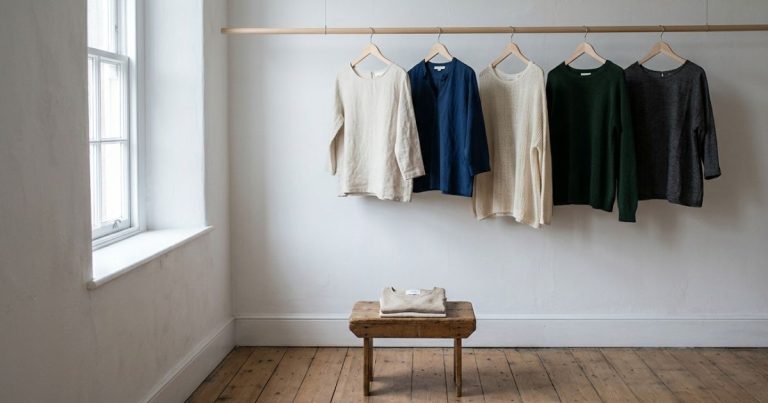
The alternative is not complicated to describe, even if it is difficult to scale. Pay workers a living wage. Maintain direct relationships with named producers. Publish supply chain information. Price goods to reflect actual production costs. Accept that the margin will be lower.
This is what Thrive Clothing — the in-house ethical fashion label at Mosaic Market — actually does. Artisans paid above the regional living wage. Named production. A garment with a story you can trace rather than a supply chain designed to obscure it. The same principle runs through every brand stocked in the Mosaic Market artisan directory: verified sourcing, transparent wages, a direct relationship between the maker and the market.
That is not virtue signalling. It is what the supply chain looks like when the hidden costs are internalised rather than externalised onto workers who have no power to resist them.
The question of alternatives to fast fashion is sometimes framed as a matter of personal taste or lifestyle preference. It is not. It is a question about who pays for cheap clothing — and the answer, right now, is reliably the same group of people: women, working in the Global South, in buildings they were sometimes told were unsafe to enter.
What you can do — and what actually moves the needle
Individual purchasing decisions are not the primary lever for changing an industry structured like this. Legislation, trade agreements, and binding corporate accountability frameworks matter far more. France has already moved to introduce a tax of up to €5 per fast fashion item, with proposals to raise it to €10 by 2030 and ban advertising for ultra-fast fashion brands. The EU is developing mandatory supply chain due diligence requirements. That kind of structural intervention changes the calculus in ways that individual shopping choices cannot.
That said, where money goes does matter at the margins. Buying from brands that publish their supply chain, name their producers, and price to reflect living wages — brands you can find in the Mosaic Market shop and through the artisan directory — is not a solution to the problem. But it is a refusal to participate in the part of the system you can actually see.
The guide to alternatives to fast fashion covers the practical options in more detail — second-hand platforms, ethical directories, what certification labels actually mean, and what to look for when a brand claims to be sustainable. The how to shop smarter guide covers the questions worth asking before any purchase.
The clothes exist. The question is who made them, under what conditions, and at whose expense.
Frequently asked questions
What is the social cost of fast fashion?
The social cost of fast fashion refers to the human costs not included in the retail price — primarily the wages, safety conditions, and quality of life of the garment workers who make the clothes. Less than 2 percent of the approximately 60 million garment workers worldwide earn a living wage. The majority are women aged 18 to 35, working in factories across Bangladesh, China, India, Vietnam, and Cambodia where labour laws are often weakly enforced. The social cost also includes wage theft, forced overtime, exposure to toxic chemicals, and the documented pattern of brands cancelling orders and leaving workers unpaid when market conditions change.
What happened at Rana Plaza and why does it matter?
Rana Plaza was an eight-storey garment factory complex in Savar, Bangladesh, that collapsed on 24 April 2013, killing 1,134 workers and injuring more than 2,500. Large structural cracks had been discovered the day before, but factory owners ordered workers back in the following morning. The factories were producing garments for at least 29 global brands at the time. Rana Plaza matters because it made visible what the fast fashion supply chain looks like when its structural incentives — maximum speed, minimum cost, diffused accountability — reach their logical conclusion. Twelve years later, garment workers remain underpaid and the supply chain remains largely opaque.
What percentage of garment workers earn a living wage?
Less than 2 percent. Research by the Clean Clothes Campaign, the Fashion Checker project, and independent labour economists consistently finds that the overwhelming majority of garment workers are paid below a living wage — the minimum required to cover food, housing, healthcare, and basic dignified living. This is not an oversight. It is the operational model: fast fashion prices are only achievable by externalising production costs onto workers with limited bargaining power.
How is fast fashion connected to gender inequality?
Around 75 to 80 percent of garment workers are women, and they disproportionately occupy the lowest-paid, most dangerous, and least protected roles in the supply chain. Men are more likely to hold supervisory positions. Women workers face additional vulnerabilities including sexual harassment, dismissal for union activity, and the loss of income during pregnancy. When brands cancel orders or factories close, the resulting unemployment, food insecurity, and increased risk of gender-based violence fall disproportionately on women. The connection between economic precarity and harm to women is well-documented across the Human Trace editorial work published at Mosaic Market.
What are ethical alternatives to fast fashion?
Ethical alternatives include buying from brands that pay verified living wages and publish their supply chain — such as Thrive Clothing and the other brands in the Mosaic Market artisan directory. Buying second-hand extends the life of existing garments without creating new production demand. Buying less and buying better — fewer pieces that last longer — reduces participation in the system regardless of which brand is chosen. The full alternatives to fast fashion guide covers these options in detail.
Related reading: