
There is a moment most people have had. You are holding two things that look similar — one made by a machine in a factory somewhere, one made by a person whose name you might know — and the second one just feels different. Heavier in your hands, somehow. More present.
That feeling has a name in psychology and a body of research behind it. But you do not need the research to recognise it. You have already had the experience. The question is what to do with it.
This piece is about that feeling — what it actually reflects, why handmade gifts create it consistently, and what it means in practice when you are choosing something to give someone you care about.
The effort heuristic — why labour adds value
Psychologists have documented something they call the effort heuristic: the consistent human tendency to value things more when we know effort was involved in making them. In experiments where participants were shown the same object described as easy to make or difficult to make, they rated the difficult version as higher quality, more valuable, and more desirable — even when the objects were identical.
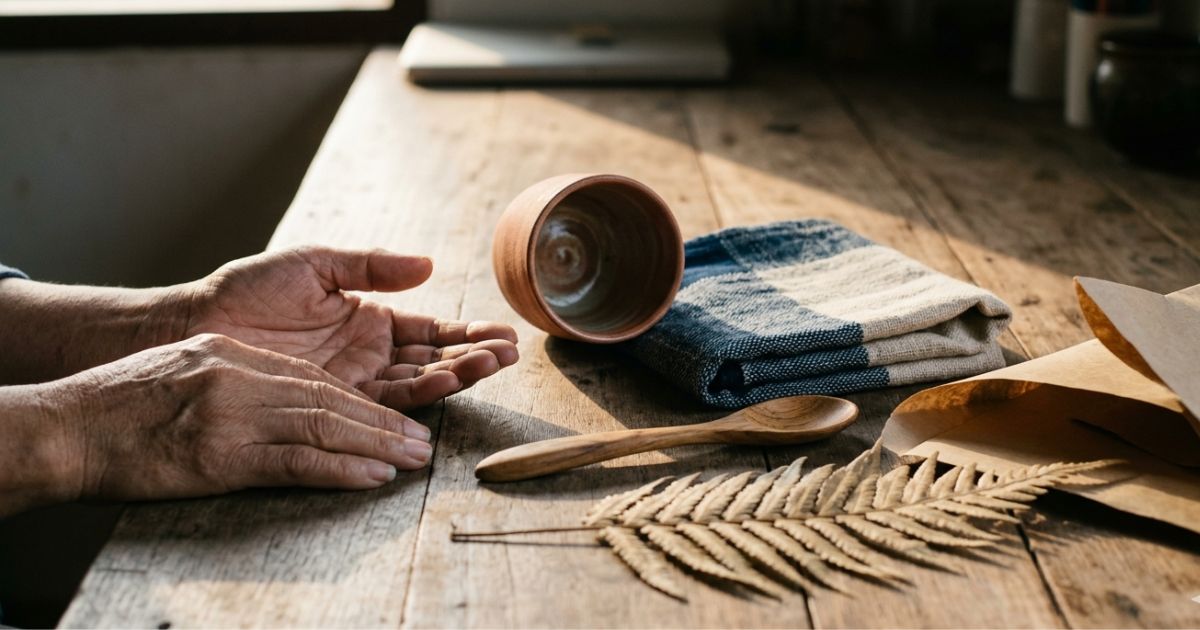
This is not irrational. Effort is a genuine signal. Time, skill, and attention are scarce resources, and when someone invests them in making an object, that investment becomes part of what the object is. A hand-thrown ceramic mug is not just the same shape as a factory-pressed one. It carries the mark of the hours it took to learn the process, the decisions made at every stage, and the particular hands that made this particular cup.
Research in consumer psychology has confirmed this consistently. Studies show that consumers view handmade products as more authentic and more valuable than identical machine-made products — and that this perception is driven specifically by a sense of naturalness and human presence. When you know a person made something, your brain processes it differently than when you know a machine did. The handmade label prompts people to infer that care and intention went into the object, and that inference raises the perceived worth — not just emotionally, but economically.
In gifting contexts specifically, this matters even more. A gift is not just a transaction. It is a communication. When you give someone a handmade object, you are communicating that you found something that carries meaning — that you did not simply click through a recommended feed and check a name off a list.
What a handmade gift actually says
The most meaningful gifts, according to social psychologists, are not necessarily the most expensive ones. They are the ones that communicate: I see who you are.
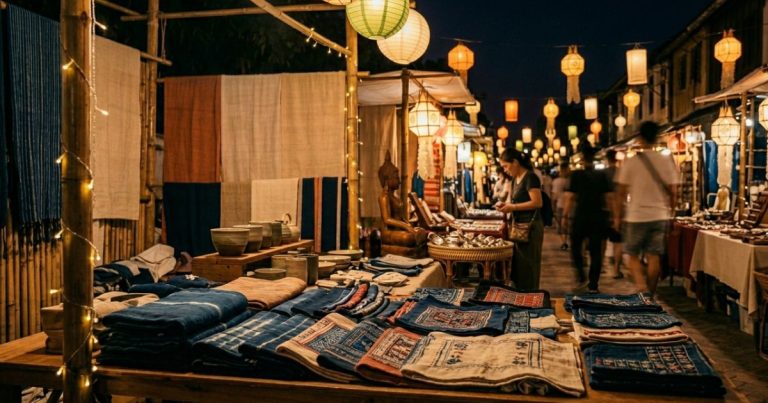
That is a harder thing to achieve with a mass-produced item than with something made by a person, in a particular tradition, using a particular technique. A piece of hill tribe textile woven on a hand loom in northern Thailand carries information in its pattern, its material, and its making that a factory equivalent simply cannot contain. When you give it, you are giving that information too — the story behind the object, the community it came from, the craft it represents.
Studies in social psychology have found that personalized gifts — gifts chosen to reflect the recipient’s specific identity and interests — increase relationship satisfaction because they communicate authenticity and commitment. They demonstrate that the giver paid attention. And attention, ultimately, is what gift-giving is in service of: a way of saying, in a form that persists, that another person matters to you.
Handmade gifts achieve this more reliably than mass-produced equivalents not because they are inherently more expensive, but because they are inherently more specific. No two pieces made by hand are exactly identical. The slight variation in a piece of woven fabric, the particular glaze on a ceramic, the hand-stitched seam of an artisan-made garment — these are not flaws. They are the signatures of a specific person, in a specific moment, making a specific thing. The recipient cannot find the same item anywhere else. That exclusivity is not manufactured scarcity. It is simply the natural condition of things made by people rather than machines.
The maker’s story changes how we experience the object
Research on consumer psychology has found that objects feel more valuable when they come with a meaningful origin narrative. A product described in terms of the person who made it, the community it comes from, and the skill it embodies is perceived as more authentic and more worth keeping than an identical product with no story attached.
This is why buying from artisan makers — or from shops like Mosaic Market that document and verify their makers — produces a different experience from buying a nameless equivalent online. When you purchase a piece of Five Tribes Fair Trade textile, you know something about the community whose weaving tradition it represents. When you buy a bar of Siamaya chocolate, you know it comes from traceable Thai cacao processed with visible craft. When you give these things to someone, you give the story alongside the object. The story does not disappear when the packaging is opened. It becomes part of what the gift means.
This is also the reason the Mosaic Market artisan directory names every maker it works with. The story behind the object is not marketing decoration. It is part of the object’s actual value to the person who receives it.
Handmade gifts last
There is a practical dimension to this that is worth naming plainly. Handmade goods are typically made from better materials, with more attention to construction, than mass-produced equivalents at similar or lower price points. A hand-stitched garment made by an artisan paid a living wage is made to last — both because the production economics require decent materials, and because the maker has professional pride in the object.
Fast fashion garments are designed within a business model that benefits from wear — and — replace cycles as short as a few months. Artisan-made clothing is designed to be worn for years, often to be repaired and continued. This matters for the person wearing it, obviously. But it matters for the gift-giver too. A gift that falls apart in six months communicates something different from one that is still in regular use three years later.
The Thrive Clothing pieces available at Mosaic Market are contemporary garments made by artisans paid above the regional living wage in Chiang Mai — wearable, modern, and made to last rather than made to cycle through. The same principle applies to Swahlee, Threads of Gold, and the other artisan brands stocked at Mosaic. Longevity is part of what you are giving.
The ethical dimension — where the money goes
There is a third reason handmade gifts matter that sits alongside the psychological and the practical: they are a more direct form of economic support for the people who made them.
When you buy a handmade piece from an artisan cooperative or a vetted ethical retailer, the margin is narrower, the supply chain is shorter, and more of the purchase price reaches the maker. This is in stark contrast to the fast fashion supply chain, where the social cost of cheap production is absorbed by workers with limited bargaining power in factories with limited accountability. The hidden costs of fast fashion are paid by people who never see the retail price.
Buying handmade from verified sources is not a complete solution to that system. But it is a different kind of participation in it — one where the transaction is more transparent, the maker captures more value, and the buyer understands what they are actually purchasing.
This is also why it matters to buy handmade from makers you can verify, rather than from platforms where the provenance is unclear. The guide to ethical shopping in Chiang Mai and the piece on how to support artisan communities through your gift choices cover the practical questions — how to tell genuine artisan goods from factory replicas, what fair trade certification means in practice, and what to ask before you buy.
What to look for when choosing a handmade gift
A few markers that distinguish genuinely handmade goods from items that use the word without the substance:
Visible maker information. Ethical artisan brands name their makers. If the brand cannot tell you who made the item, where, and in what conditions, the handmade claim should be treated sceptically.
Slight variation between pieces. Genuine handmade goods are not perfectly uniform. A hand-woven textile has slight irregularity in the pattern. A thrown ceramic has a particular surface quality. These are not defects — they are evidence of a human hand rather than a mould.
Pricing that makes sense. An object that took a skilled person several hours to make and was sold through a fairly-priced supply chain cannot retail at the same price as a factory equivalent. If the price looks identical to mass-produced goods, something in the chain is not what it claims.
A story that goes somewhere. Genuine artisan brands can tell you about the community, the technique, the materials, and the making. Vague terms like “artisan-inspired” or “handcrafted feel” are design choices, not production descriptions.
Mosaic Market pre-vets every brand it stocks against these markers. The artisan directory documents every maker, which means you can give any piece from the shop with full knowledge of where it came from and who made it. That story is part of the gift.
Handmade gifts from Mosaic Market
If you are looking for handmade gifts worth giving — whether you are in Chiang Mai or buying online — the brands stocked at Mosaic Market cover a range of categories:
Thrive Clothing — contemporary slow fashion made by artisans in Chiang Mai, paid above the living wage. Wearable, lasting, and with a supply chain you can trace.
Swahlee — handmade clothing with a clear production story and artisan makers named throughout.
Five Tribes Fair Trade — textiles woven in hill tribe weaving traditions from northern Thailand. Fair Trade certified, generational craft.
Threads of Gold — traditional northern Thai weaving brought into wearable contemporary form.
Siamaya Chocolates — single-origin Thai chocolate with traceable cacao and genuine craft in the making. An exceptional gift.
Pure Thai Naturals — certified organic personal care products from Thai botanicals.
SuperBee — beeswax wraps and plastic-free household goods from a Chiang Mai social enterprise. Practical, beautifully made, and ethically produced.
Mosaic Brew — single-origin northern Thai specialty coffee, roasted in Chiang Mai. For the person who would rather receive something they will use every morning than something they will display and forget.
All of these are available in the Mosaic Market shop, open Monday to Saturday at Mosaic Café on Changklan Road. Online purchase and posting available for most items.
Frequently asked questions
Why are handmade gifts more meaningful than store-bought ones?
Psychologists describe the effort heuristic: people consistently value objects more when they know effort was involved in making them. A handmade gift communicates that someone invested time, skill, and attention — and that investment becomes part of what the gift is. Research in social psychology has also found that gifts chosen to reflect the recipient’s specific identity — which handmade, artisan goods do naturally — increase relationship satisfaction because they communicate that the giver paid genuine attention.
Do handmade gifts have to be expensive?
Not necessarily. The value of a handmade gift is not primarily monetary — it is about the effort, care, and story embedded in the object. A hand-woven pouch, a bar of artisan chocolate, or a bag of single-origin coffee can be more meaningful than an expensive branded item that came off a production line. That said, genuinely handmade goods from makers paid fairly do tend to cost more than mass-produced equivalents, because the production costs are real and are priced in rather than externalised.
How do I know if something is genuinely handmade or just marketed that way?
Look for named makers, slight natural variation between pieces, pricing that reflects real labour costs, and a production story the brand can actually tell you. Vague terms like “artisan-inspired,” “handcrafted feel,” or “small-batch” without further detail are design choices rather than production descriptions. Buying from shops like Mosaic Market, which vets and documents every maker in its artisan directory, removes this uncertainty.
What are the best handmade gifts from Chiang Mai?
Chiang Mai has exceptional artisan craft in textiles (hill tribe weaving, indigo dyeing, traditional looms), ceramics, silver jewellery, and specialty coffee. At Mosaic Market, verified handmade gifts include pieces from Thrive Clothing, Five Tribes Fair Trade, Threads of Gold, Siamaya Chocolates, SuperBee, and Mosaic Brew — all with documented sourcing and makers. The full artisan directory lists every brand with its production story.
How does buying handmade support artisan communities?
When you buy handmade from verified ethical sources, more of the purchase price reaches the maker and the community. The supply chain is shorter, the margin is narrower at the brand level, and the transaction is more transparent. Many artisan traditions — hill tribe weaving, traditional silversmithing, botanical craft knowledge — are economically viable only when there is sustained demand for the goods at fair prices. Buying from verified sources like those in the Mosaic Market artisan directory is a direct contribution to that sustainability.
Related reading:
- Artisan directory — the makers behind Mosaic Market
- How to support artisan communities through your gift choices
- Artisan markets in Chiang Mai — a buyer’s guide
- What to buy in Chiang Mai — 15 gifts worth bringing home
- Ethical shopping in Chiang Mai
- Thrive Ethical Fashion — slow fashion made in Chiang Mai
- Shop Mosaic Market