A Human Trace Editorial Series Feature for Mosaic Market
Some systems of inequality are loud — visible in laws, politics, and public debate.
Others are so old, so embedded, so normalized, that they fade into the background of daily life.
Caste is one of them.
In the Human Trace conversation with Kamal Raj, caste emerges not as an ancient relic, but as a living force shaping modern labor, opportunity, migration, exploitation, and the quiet violence that follows people from childhood into adulthood.
To understand caste is to understand how identity itself can be weaponized and how dignity can be interrupted before a person ever has the chance to claim it.
This is not a historical issue.
It is a human one.
A 2025 one.
A global one.
Caste Isn’t About Belief — It’s About Power
Caste is often misunderstood as a cultural or religious concept.
But caste, at its core, is a system of:
- imposed identity
- inherited inequality
- immovable hierarchy
- generational disadvantage
- social control
It determines:
- where a person can work
- what labor they’re expected to do
- who they can marry
- how they are perceived
- which opportunities they’re given
- whose suffering is seen
- whose dignity is optional
Kamal describes caste discrimination as something that shapes a person’s entire worldview, because it shapes the world around them.
It is not simply prejudice.
It is a structure.
The Violence That is “Ordinary”
Caste-based violence rarely looks like a singular act.
It looks like daily humiliation:
- children segregated at water taps
- students discouraged from ambition
- workers assigned to dangerous tasks
- women targeted with impunity
- entire communities denied basic services
- neighborhood lines drawn by identity
- silence enforced by social expectation
This violence accumulates quietly, creating generations of people who are conditioned to expect less from the world and more suffering from it.
This parallels the subtle forms of harm explored in:
👉 When Violence Is Normalized: How Gender-Based Abuse Hides in Plain Sight
Violence is not always physical.
Often, it is structural.
How Caste Fuels Trafficking and Labor Exploitation
Caste doesn’t only shape social life — it shapes the labor market.
Kamal explains how lower-caste communities are systematically funneled into the most dangerous, underpaid, and stigmatized forms of work. This vulnerability becomes a gateway to exploitation:
- debt bondage
- domestic servitude
- forced labor in factories
- hazardous sanitation work
- migration under false promises
- recruitment by trafficking agents
People born into lower castes are often told they are “meant” for this type of labor.
When you grow up hearing that your life is worth less, it becomes easier for traffickers to convince you that leaving your village for a risky job is your only chance for dignity.
This dynamic mirrors the vulnerability pathways we explored in:
👉 How Global Shocks Create New Trafficking Risks
Exploitation doesn’t begin with traffickers.
It begins with inequality.
Women Carry the Sharpest Edge of Caste
Caste and gender together create a double burden.
For lower-caste women, the hierarchy is both horizontal and vertical — they face discrimination from society at large and from within their own communities.
This shows up in:
- forced early marriage
- limited access to education
- gendered caste-based labor
- sexual violence used as a tool of domination
- lack of justice when reporting abuse
- poverty cycles that disproportionately target women
Caste-based sexual violence is often overlooked or normalized, especially when survivors come from marginalized groups.
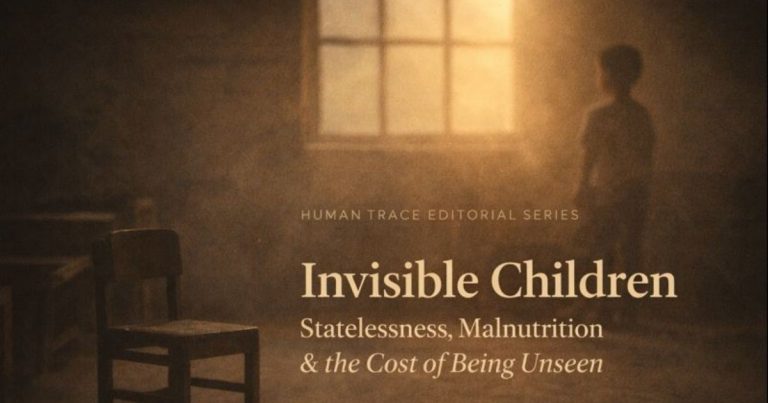
This silence echoes the themes explored in: 👉 Invisible Children: Statelessness, Malnutrition & the Cost of Being Unseen and 👉 Life Without Papers: The Daily Reality of Refugees in Malaysia
When identity itself becomes a barrier, vulnerability compounds.
Resistance Isn’t Quiet — It’s Constant
Kamal’s work highlights something rarely captured in mainstream discussions: marginalized communities have always resisted.
Resistance looks like:
- organizing youth workshops
- documenting caste violence
- breaking traditional labor cycles
- educating women and girls
- public storytelling
- reclaiming cultural pride
- challenging political systems
- creating safe community spaces
These acts may not grab headlines, but they change futures.
Mosaic Market sees this same spirit in the artisanal and social enterprise communities we partner with — individuals and groups reclaiming dignity through skill, creativity, and fair work.
For example: 👉 Five Tribes Fair Trade champions marginalized artisans reclaiming space in the global marketplace. 👉 Thrive Ethical Fashion transforms vulnerable women’s stories into pathways of safety and livelihood.
Resistance is not always protest.
Sometimes, it is weaving a basket, sewing a dress, or carving a piece of wood with pride.
The Emotional Cost of Inherited Inequality
Caste-based harm isn’t limited to physical or economic violence.
It shapes a person’s internal world:
- chronic self-doubt
- identity confusion
- social anxiety
- generational trauma
- internalized shame
- fear of visibility
- guilt for wanting more
Kamal’s storytelling makes clear: dignity can be interrupted without ever being physically taken. The interruption begins when society tells a child they are “less.”
Undoing that message requires community, opportunity, safety, and stories told with respect — the foundation of Mosaic Market’s approach, described in our Ethical Storytelling Guidelines.
Why This Story Matters to Mosaic Market
Chiang Mai, Thailand — where Mosaic Market operates — is home to families from Myanmar, India, Bangladesh, and beyond. Many of these communities have experienced caste discrimination in their home countries, carrying the scars of inequality into their new lives.
Understanding caste helps us understand:
- why some families fear authority
- why documentation is so precious
- why certain forms of work feel shameful or dangerous
- why artisans sometimes undervalue their skill
- why safe community spaces matter
- why dignity-centered storytelling is essential
Caste is not a Southeast Asian issue.
It is a global one.
Wherever identity is weaponized, exploitation follows.
🎧 Listen to the Full Episode on The Human Trace
Hear Kamal Raj speak about identity, caste injustice, and the long fight for dignity.